
Medical Gases for Healthcare Facilities
- delicia
- Reading time: 5 min.
Table of Contents
Medical gases are an essential part of hospital infrastructure. Their management and distribution help ensure patient safety and the efficiency of medical procedures within healthcare facilities. In this article, discover everything you need to know about medical gases, their applications, installations and applicable standards.
What does the term “medical gases” refer to?
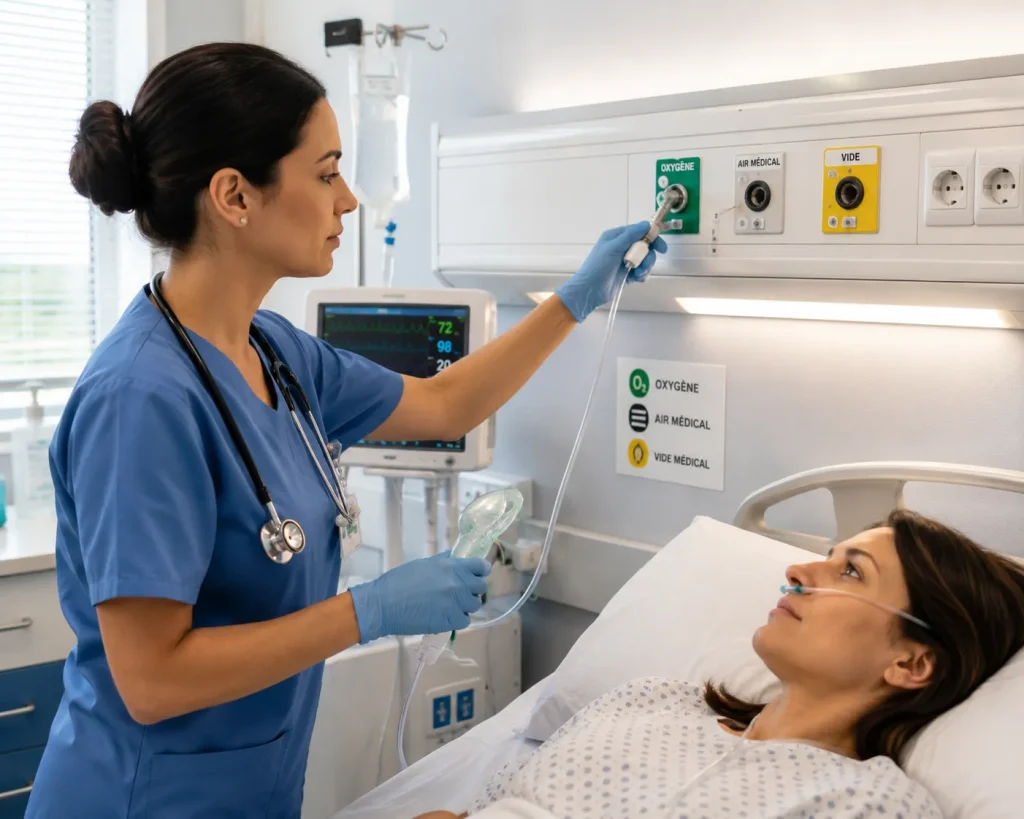
Medical gases include all gases and fluids intended for medical use in hospitals and clinics. The main ones include medical oxygen, nitrous oxide, medical air, nitrogen, carbon dioxide and medical vacuum. They are used for a wide range of applications, including patient oxygenation, supplying medical devices, ventilation and suction.
What are the main medical gases used in healthcare facilities?
The table below summarizes the major medical gases, their key characteristics, and their uses:
How is the distribution of medical fluids organized?
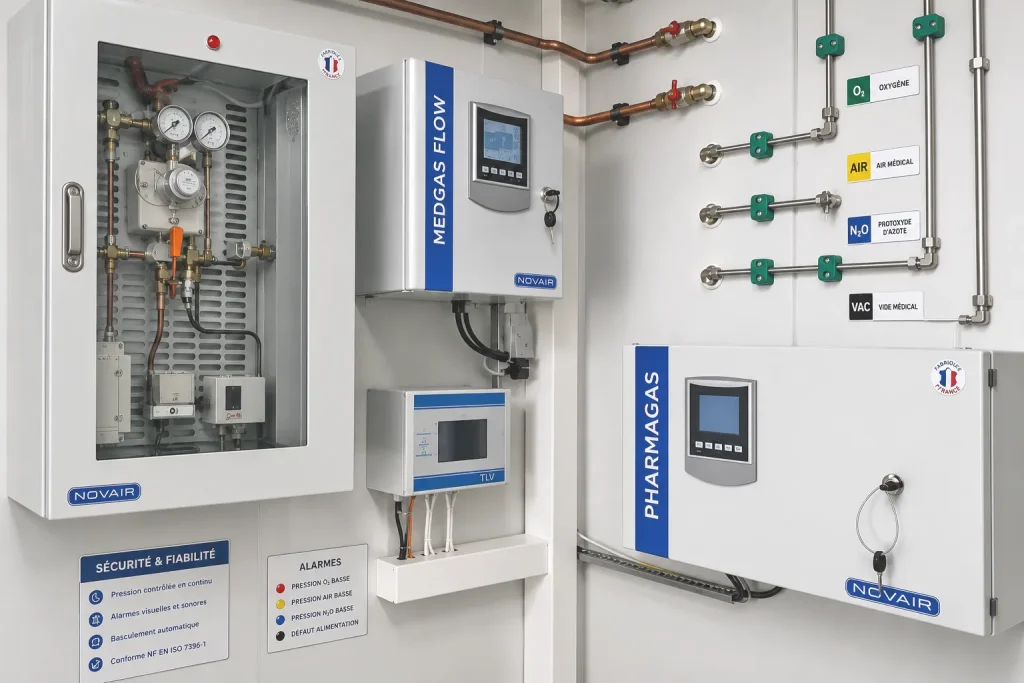
The medical fluid distribution network is built around several key components. First are the production or storage facilities (generators, cylinders, tanks), followed by a high-pressure primary distribution system to supply the entire building. Next come the secondary networks, which deliver the gas to the patient’s vicinity via clearly labeled wall outlets. Ancillary equipment, such as pressure regulators and backup systems, allows for pressure adjustment and ensures optimal safety at all times.
What systems ensure the security of medical networks?
In every healthcare facility, safety depends on:
- Pressure monitoring devices (gauges, alarms)
- Automatic or manual backup systems (cylinders, secondary units)
- Clear differentiation of systems (colors, labeling, symbols)
- Regular maintenance of equipment, in accordance with regulations
All of these elements help prevent risks related to pressure, toxicity, or confusion between different medical gases.
What regulations and standards apply to these facilities?
Every medical fluid distribution system must comply with a strict regulatory framework, including:
- Compliance with the NF EN ISO 7396-1 standard for networks and central stations;
- CE certification of devices;
- Strict monitoring through up-to-date operational documentation;
- Mandatory periodic inspections;
- Documentation of operating procedures, emergency procedures, and technical interventions.
What regulations and standards apply to these facilities?
The storage and use of medical fluids are governed by strict standards. Cylinders must be stored in secure locations, away from sources of heat or impact. Accurate labeling of each wall outlet or installation helps prevent errors in use. Healthcare professionals are trained in handling, monitoring pressure levels, and emergency procedures.
What backup systems are in place in case of a failure?
Every medical fluid distribution system has backup mechanisms in place in case the primary sources fail or run out:
- Automatic switchover to reserve cylinders;
- Secondary stations to maintain the supply of medical gases;
- Alarms that immediately signal any drop in pressure or supply failure;
- Technical data sheets and documents accessible to each department.
What changes and challenges lie ahead for healthcare facilities?
Innovation in the medical fluids sector is leading to the development of new, more efficient systems:
- On-site, stand-alone oxygen generators
- Connected monitoring systems for pressure and safety
- Optimized traceability through the digitization of technical documents
Our offerings are evolving to ensure continuous availability, expert technical support, and compliance with best practices in healthcare.
Frequently Asked Questions About Medical Fluids for Healthcare Facilities
Oxygène médical, air médical, protoxyde d’azote, azote, gaz carbonique, vide médical.
La pression garantit que chaque gaz médical arrive avec le débit et la sécurité adaptés selon les besoins du service ou du soin.
Par la conformité aux normes, des alarmes, des systèmes de secours, et une maintenance régulière, documentée.
Oui, chaque réseau doit prévoir des bouteilles ou centrales secondaires pour faire face à toute urgence.
Dans la documentation technique de l’établissement, les documents officiels et la norme NF EN ISO 7396-1.
Elles permettent un accès sécurisé et rapide aux gaz médicaux au plus près du patient. Pour conseil personnalisé, audit ou optimisation de votre réseau, faites confiance à Novair Medical, spécialiste des solutions et centrales de génération d’oxygène adaptées à tous les établissements de santé.