
Producing oxygen on site: the autonomous response to increased oxygen needs
published on 08/18/2025
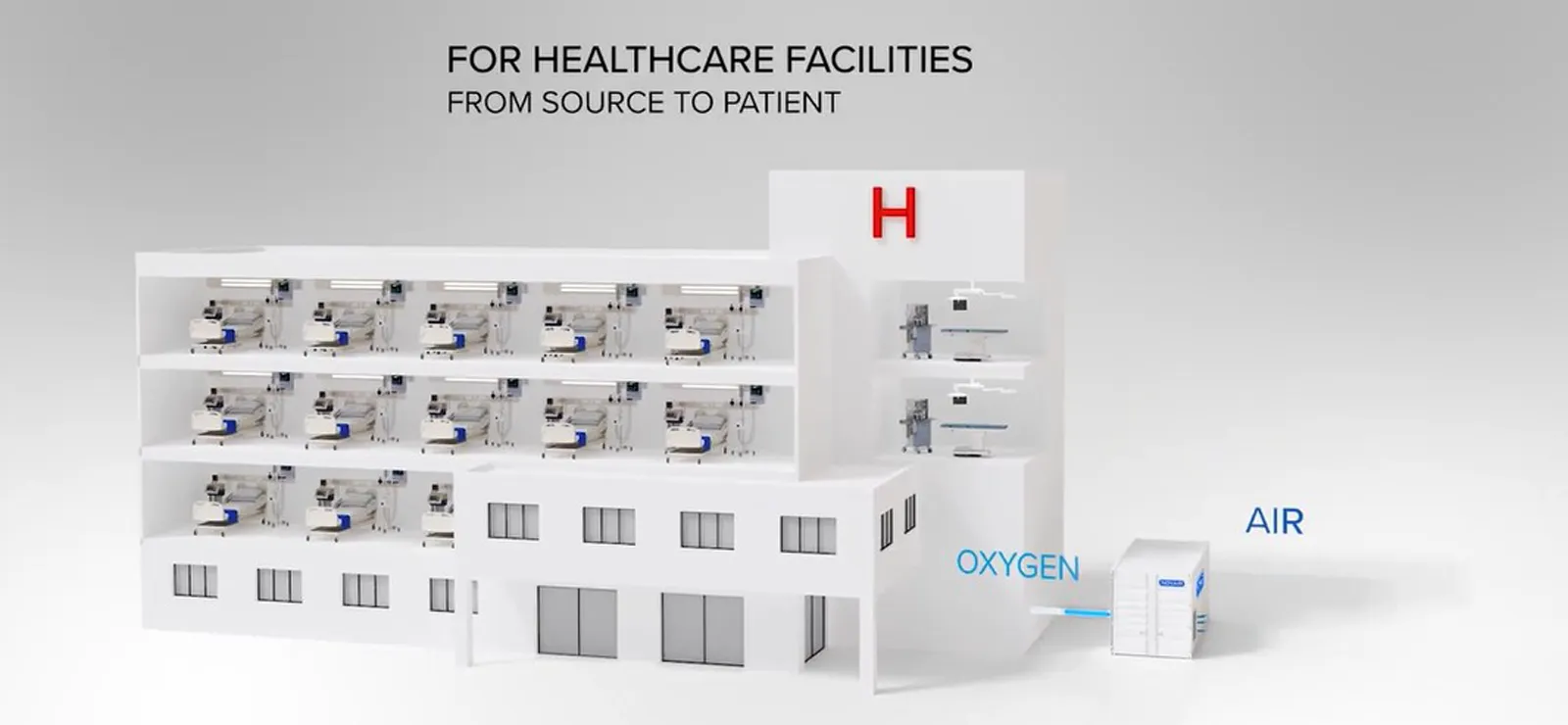
The treatment of acute respiratory failure caused by severe cases of COVID-19 involves ventilation: this involves oxygenating the patient via a mask or using a ventilator, both of which are powered by a medical oxygen source. During the coronavirus epidemic, the availability of sufficient quantities of medical oxygen in hospitals is therefore critical.
How can on-site oxygen production provide an effective response to the increased oxygen needs faced by our hospitals?
When a hospital installs an oxygen generator, it becomes its own oxygen supplier: oxygen is produced on site, on demand, from ambient air. The hospital thus becomes self-sufficient: it no longer relies on bulk or bottled oxygen deliveries and is no longer dependent on its supplier’s ability to deliver.
Thousands of hospitals around the world already use medical oxygen generators. This autonomy is now within reach of all healthcare facilities in France. Oxygen generators are medical devices, and the medical oxygen they produce is listed in the European Pharmacopoeia.
An oxygen generator as a primary and secondary source: an oxygen reserve in case of increased demand.
The production capacity of a generator is sized according to the specific needs of each hospital. For hospitals with operating rooms and/or intensive care units, generators are doubled so as to have twice the capacity of the nominal requirement. This is a valuable oxygen reserve in the event of an abnormal increase in demand, as we are experiencing today.